Why wouldn’t you drive electric?
Electric cars are now more popular than ever before in the UK. Almost 400,000 new EVs were registered in 2024, but many motorists are still reluctant to make the switch to battery powered driving.
Concerns surrounding any relatively new technology can be valid. When it comes to electric driving, the same few always seem to crop up, such as costs, charging, emissions and the overall safety of the vehicle.
And, of course, there are many EV myths and disinformation that still swirls around, often perpetuated online, that has long been debunked. (No, your EV isn't likely to catch fire!)
So, why wouldn't you drive electric?
Electric cars cost more
Yes, it's true that pure electric vehicles tend to be more expensive than their petrol and diesel counterparts. On the face of it, it does seem like a large hike in price to take the greener option, especially at a time when many people in the UK are seeing prices rise across the board. But when you delve a little deeper, the electric option can work out better value for you across its full life span.
In 2025, the UK goverment launched a EV Grant to help fruther reduce the cost of electric cars by up to £3,750 to help them become even more affordable to many more motorists.
According to the RAC, the average cost of a full tank of petrol in the UK cost around £75 at the start of 2025.
Let's compare it to what it would cost you for a 'full tank' of charge for the MG4 EV, which has three battery sizes: 49 kWh (Standard Range - 217 miles), 64 kWh (Long Range - 279 miles), and 77kWh (Extended Range - 329 miles)
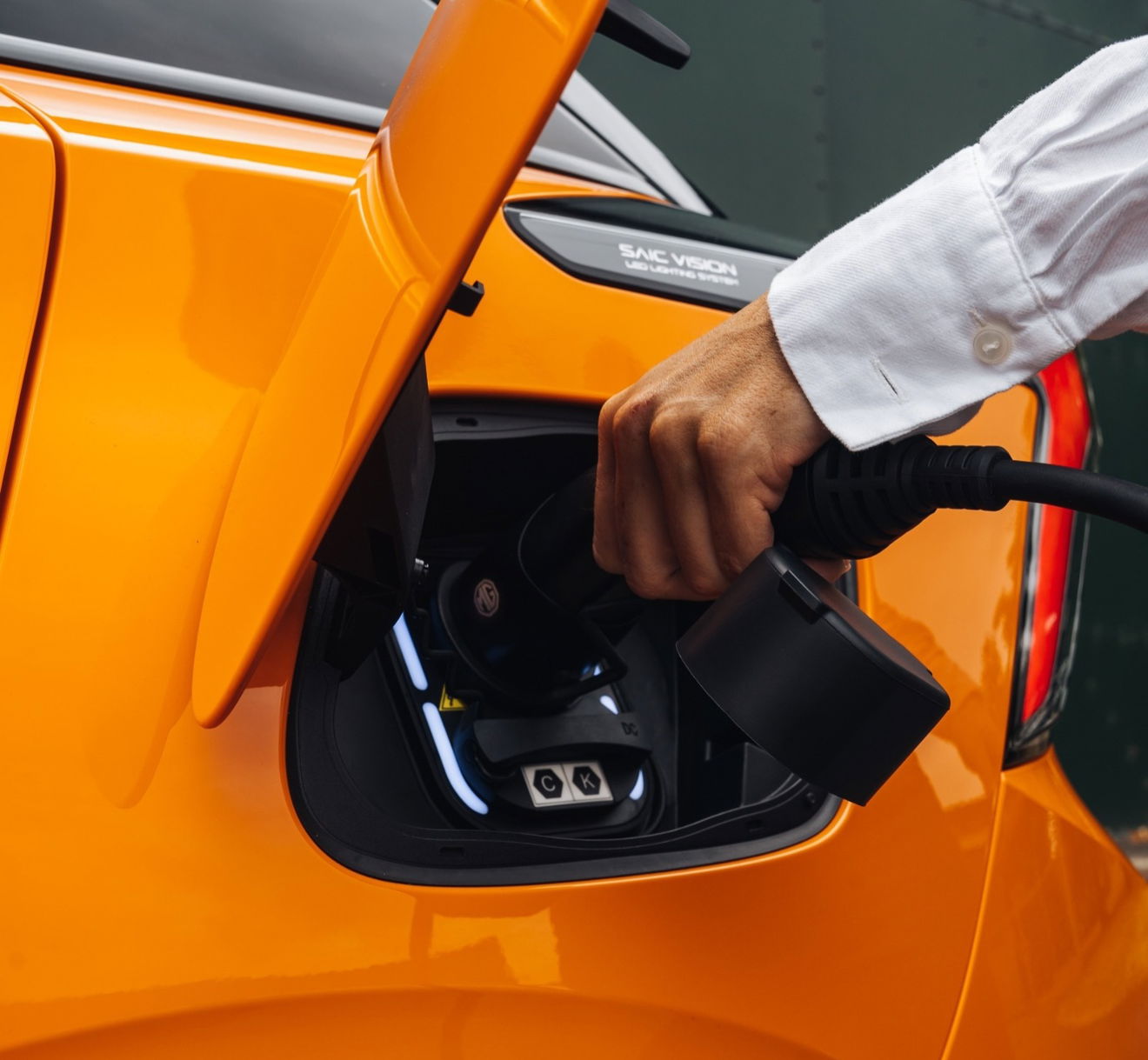
According to theenergyshop.com, the average price of electricity per kWh for July 2025 in the UK is around 25p. That equates to a full home charge cost, from empty, at £12.25 for the Standard Range, and £16 for the Long Range, and £19.25 for the Extended Range model. However, you're likely to be charged more for using public charging points.
Many electricity companies have set up special rates for customers with EVs, to accommodate home charging, while it is advised to charge your car overnight when electricity rates are cheaper, helping to bring the costs down even further for a full charge!
Over just a few years of driving electric, the savings you could make compared to regularly filling up with petrol are huge.
In addition, you currently pay much lower road tax on an electric vehicle in the UK and EV maintenance costs are generally lower than ICE (Internal Combustion Engine) models due to fewer moving parts that power the car.
And, of course, EV drivers are exempt from being charged for entering city centre ultra-low emission zones!
Shop EVs at Chapelhouse
EV offersWhat about range anxiety?
EV battery technology is improving all the time. When EVs first entered the market around a decade ago, the distance they could travel on a single charge was minimal compared to today - and it's only going to get better.
In 2014, the Nissan Leaf was the flag bearer for a new generation of electric family cars with a 22kWh battery and a driving range of around 80 miles.
Fast forward a decade and the similarly sized MG4 EV Extended Range boasts a 77kWh battery and a range that can easily clear 300 miles from a single charge.
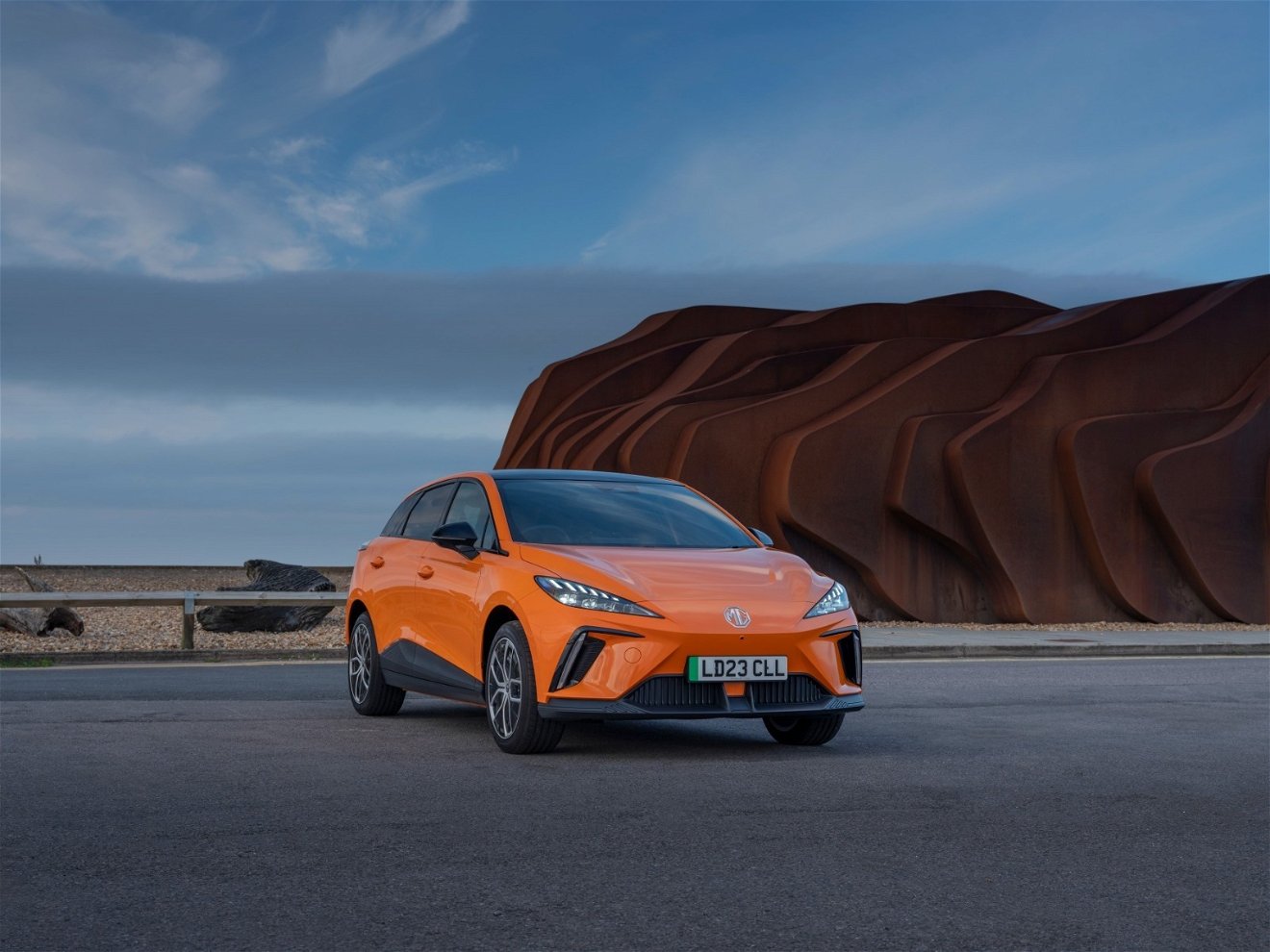
On that basis, you may assume that the MG4 EV is an outlier in price due to its long battery range. But the MG4's affordability compared to its mid-sized family hatchback rivals has garnered a whole host of major motoring awards since its launch in 2022.

MG 4 EV
Premium Long Range 64kWh
SAVE
£3,200
£26,795
Was £29,995
£329
PM PCP
- Electric
- Automatic
- 5 door
£3,200 SAVING | 0% APR | 7-year MG Warranty
MG 4 EV
Premium Extended Range 77kWh
SAVE
£3,545
£29,450
Was £32,995
£359
PM PCP
- Electric
- Automatic
- 5 door
£3,545 SAVING | 0% APR | 7-year MG Warranty
MG 4 EV
XPOWER 64kWh
SAVE
£2,900
£31,095
Was £33,995
£369
PM PCP
- Electric
- Automatic
- 5 door
£2,900 SAVING | 0% APR | 7-year MG Warranty
The average range for an EV is now 236 miles, so for day-to-day usage with a short work commute, you won't need to worry about recharging too often even if it has a smaller battery.
It has long been claimed that EVs don't work as efficiently in cold weather but that isn't strictly the case.
The lithium-ion batteries that power EVs are essentially chemical devices and chemicals tend to react quicker in warmer temperatures. On colder days, it may take your EV longer to warm up, but it doesn't necessarily mean it's using more energy to do so.
But the fact remains that you're likely to see around a 20% drop-off in real-world range on a freezing cold morning compared to a blistering summer's afternoon.
Using the in-car heating or air conditioning will also deplete your range a bit more quickly too - however the same can be said for an ICE model too. And if your EV has an Eco-mode, it will help streamline power used during acceleration and bolster the regenerative braking system.
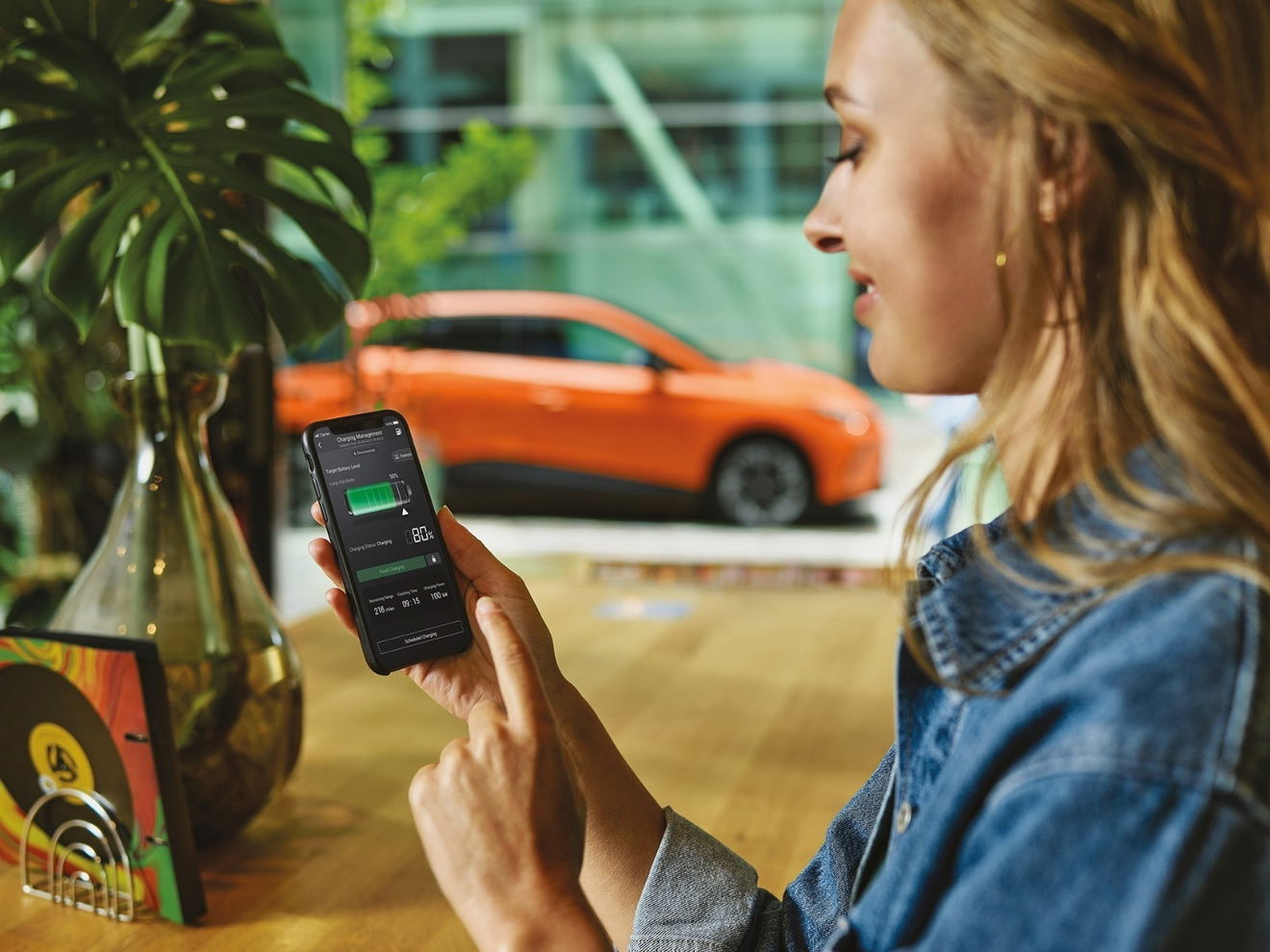
Many EV smartphone apps now allow you to switch on your electric car remotely to pre-heat the battery before you start your journey!
The same apps will also allow you to schedule charging times and give you a heads-up as to where your nearest public charging stations are, should you need to power up when you're out on a longer journey.
In the unlikely event that you do get caught short and are left stranded without any charge left in your EV, the Vehicle-to-Load (V2L) feature that can be found in many MG electric models allows you to recharge your car directly from another EV via the charging cable.
Where can I charge my EV?
A lack of available charging points has long been a stumbling block for drivers looking to buy an electric car.
Those who don't have access to off-road parking may feel it alienates them from home charging ports and don't feel brave enough having to rely on the public charging infrastructure. But the nation's charging network is growing to meet the demands of a higher rate of EVs on the road.
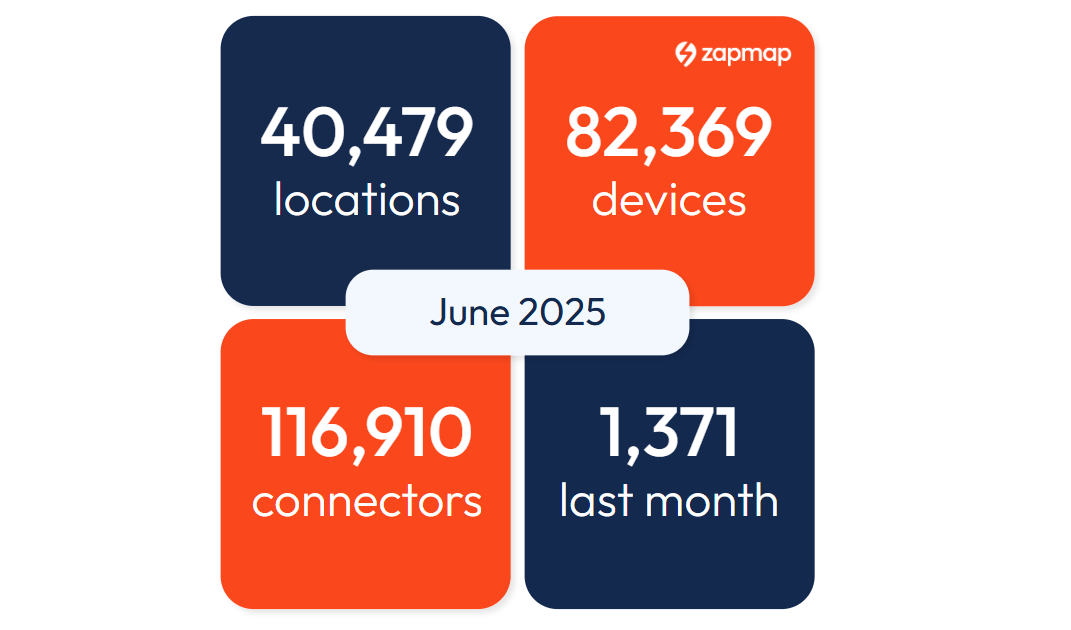
Dedicated charging website zapmap states that at the end of February 2024, there were over 82,000 EV charging ports in the UK, across 40,000 different locations. The UK goverment has pledged to increase this number rapidly to 300,000 by 2030.
Charging ports are separated into four speeds or power ratings: slow (3-7kW), fast (8-49kW), rapid (50-149kW) and ultra-rapid (<150kw).
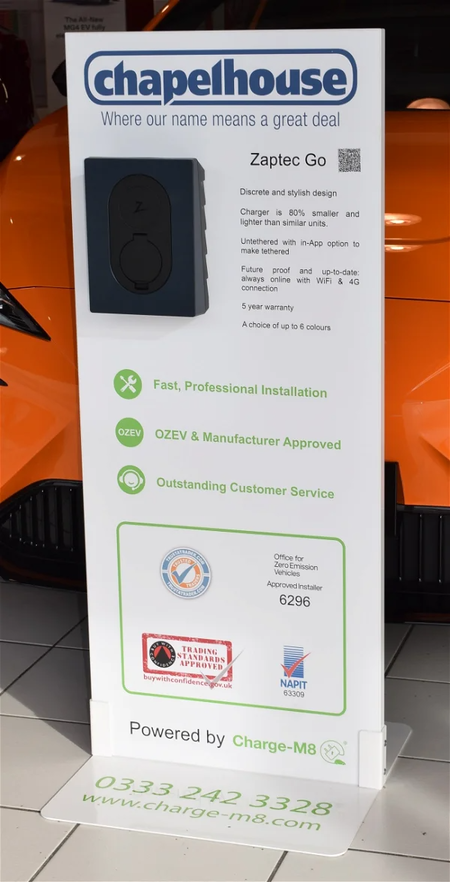
If you are thinking about making the switch to electric driving and require a charging point for your home or business, Chapelhouse has partnered with Charge-M8. Based in the North West, Charge-M8 is a manufacturer and installer of affordable charging points that can fit all electric vehicles.
All Charge-M8's products are OLEV and OZEV approved, including a variety of Tethered and Untethered chargers. Once your EV charger is installed, Charge-M8 also offers full maintenance support, plus a 3-year guarantee with all their products.
Known informally as 'wall boxes', Charge-M8 only manufacture and install their own EV chargers. They also only use their own expert installation engineers to guarantee your EV charging point is installed to the highest standards.
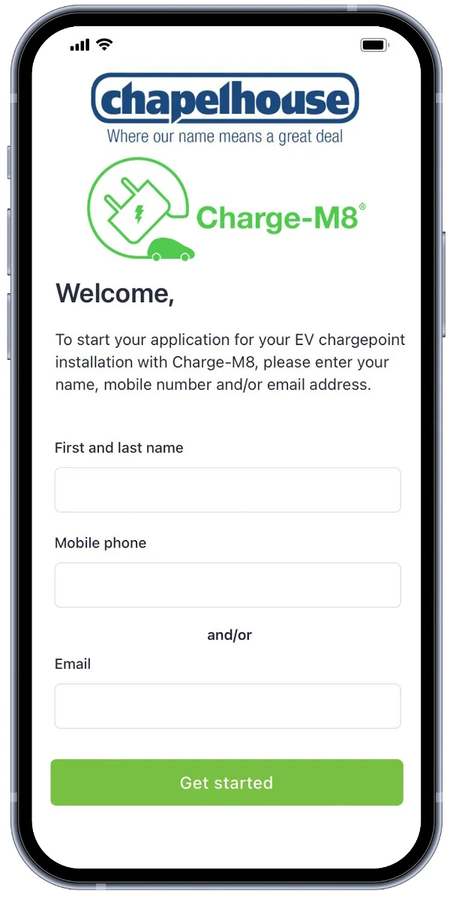
Visit your local Chapelhouse dealership and simply scan the QR code on our display to start your EV charging journey.
So, why wouldn't you drive electric now?